
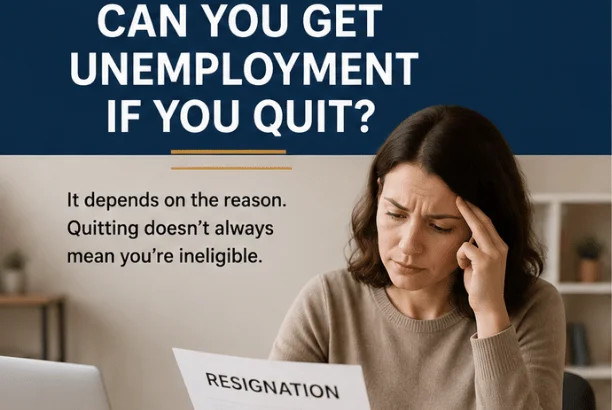
Quitting a job does not always prevent you from receiving benefits. Your reason for leaving, the law in the state where you worked, and the evidence supporting your claim can all affect the decision. You might also like NJ Disability Explained.
Short answer: Yes, sometimes. If you’re asking, can you get unemployment if you quit?” the key issue is usually whether your state finds “good cause” for leaving. Job-related reasons, such as unsafe working conditions, harassment, or significant pay changes, can qualify. Some states also recognize compelling personal reasons.
| Situation: Can You Get Unemployment If You Quit | Possible effect on a claim | What usually matters |
|---|---|---|
| Leaving for a career change or personal preference | Often disqualifying | Whether state law recognizes the reason |
| Unsafe or dangerous conditions | May qualify | Severity, reports, and attempts to solve the problem |
| Harassment or discrimination | May qualify | Records showing intolerable working conditions |
| Major cuts to pay, hours, or benefits | May qualify | Size of the change and employer responsibility |
| Medical or family circumstances | Depends heavily on the state | State exceptions and supporting evidence |
| Forced resignation | May be treated differently from a voluntary departure | Whether the employer effectively gave you no real choice |
The federal benefits system is administered by individual states. Each state determines eligibility, benefit amounts, and how a separation from work affects a claim.
Key Takeaways
The rule is not simply “quit equals denied.” A voluntary departure usually creates a more difficult eligibility question, but good cause can change the result. Your strongest claim usually has three parts: a legally recognized reason, evidence supporting that reason, and proof that you tried reasonable alternatives before leaving when doing so was possible.
State differences matter. A personal reason accepted in one state may not qualify in another. You must also satisfy the other weekly eligibility requirements after your separation.
When Can You Get Unemployment If You Quit?
A person who leaves voluntarily will usually need to show a qualifying reason under state law. The phrase commonly used is “good cause,” though its exact meaning varies by state. Some jurisdictions focus strongly on reasons connected to the job. New Jersey, for example, says a worker may qualify when working conditions become unsafe, unhealthy, or dangerous enough that leaving is the only reasonable option.
The claimant carries the burden of proving the reason. Other states recognize a wider set of exceptions. The Connecticut Department of Labor lists 4 statutory exceptions that can apply to a voluntary quit: certain caregiving situations, domestic violence, transportation problems, and relocation with a spouse.
That difference is why a general internet answer cannot decide an individual claim. The agency applying your state’s law makes that decision after reviewing the circumstances.
What “Good Cause” Usually Means
Good cause tends to involve a serious problem rather than ordinary dissatisfaction with a job. Common examples include unsafe conditions, discrimination, harassment, unpaid wages, major changes in working terms, or demands to perform illegal acts. Constructive discharge can also matter. This term describes circumstances in which working conditions become so intolerable that a reasonable employee would feel forced to leave.
A resignation in that situation may be treated differently from an ordinary voluntary departure. For more articles explaining legal rules in plain language, readers can browse Magzina’s Law section.
Work-Related Reasons
The strength of a work-related claim often depends on both the problem and what happened before the resignation. A serious reduction in pay is different from disliking a schedule. Documented harassment is different from a personality conflict with a supervisor. A genuine safety hazard is different from routine workplace frustration.
In many cases, evidence that you reported the problem and gave the employer a reasonable chance to address it can support your explanation. Legal aid organizations advise workers to maintain communication and follow relevant workplace complaint procedures when possible.
Personal Reasons
Personal circumstances are more state-specific. Some states recognize certain medical circumstances, domestic violence, caregiving responsibilities for certain relatives, or relocation because of a spouse’s employment. Connecticut’s rules show how detailed these exceptions can become. New Jersey follows a more work-connected standard while still recognizing specific statutory exceptions such as domestic violence.
Do not assume that a compelling personal reason automatically qualifies. Check the rules that apply in the state where you worked.
What Usually Does Not Qualify
Leaving because you want a new career, dislike your job, or want better advancement opportunities usually creates a weaker claim. Those may be sensible reasons to resign, but they often do not meet the legal standard for good cause. Minor conflicts at work can also be difficult to establish as a qualifying reason. The same is true of ordinary dissatisfaction with hours or duties.
The key question is often whether the circumstances were serious enough to justify leaving under that state’s rules.
What If You Quit Because of Stress or a Toxic Workplace?

The word “toxic” does not have a single legal meaning. A claimant should describe the underlying facts instead. Stress by itself may not satisfy a state’s standard. Documented harassment, discrimination, threats, dangerous conditions, or severe employer-created changes can present a different case.
Save messages, written complaints, schedules, pay records, and responses from management. If the problem involves your health, appropriate medical documentation may also matter. A clear record gives the state agency facts to evaluate rather than only a general description of a bad workplace.
What If You Quit Before You’re Fired?
Resigning because you think termination might occur can make a claim harder to prove. The agency may view the separation as voluntary unless the facts show that you had little real choice. The situation changes when an employer gives a direct “resign or be fired” ultimatum or creates conditions that amount to constructive discharge. State agencies look at who initiated the separation and what evidence supports each version of events.
If this happens, keep written notices, performance documents, emails, and any messages showing what the employer told you. For related workplace and company topics, Magzina also maintains a Business section.
Build a Claim File Before You Leave
A useful way to prepare is to create a simple claim file before resigning. This turns a vague account into a dated record that an examiner can review.
| Save this | What it can establish |
|---|---|
| Emails, texts, and internal messages | What happened and when |
| Complaints to HR or management | Your attempt to address the problem |
| Employer responses | Whether corrective action was offered |
| Pay stubs and schedules | Changes in wages, hours, or duties |
| Medical documentation when relevant | The basis for a health-related reason |
| Resignation letter | The reason you stated when leaving |
| Personal timeline | Dates, witnesses, incidents, and follow-up efforts |
Write your resignation letter carefully. A vague statement such as “personal reasons” may leave out facts that later become central to the claim. Do not exaggerate the record either. State agencies can obtain information from both the worker and the former employer during fact-finding.
How to File After You Quit
Step 1: Find the correct state program. Claims are generally filed in the state where you worked. The federal benefits portal can direct workers to the correct state website.
Step 2: Apply even if eligibility is uncertain. The state agency, not the former employer, makes the eligibility determination. The federal unemployment benefits portal at unemployment.gov states that individuals may apply and let the state decide whether they meet the requirements.
Step 3: Describe the separation accurately. Give the actual reason you left. Submit requested documents and answer fact-finding questions consistently.
Step 4: Continue meeting weekly requirements. Claimants generally must remain able and available for suitable work and actively seek work while claiming benefits. Those requirements can become especially relevant when the original reason for leaving involved illness or childcare.
A temporary loss of income can affect household planning. Magzina’s Finance section includes broader personal-finance reading while a claim is being reviewed.
What If Your Claim Is Denied?
A denial is not always the final step. Every state has an appeals process, although deadlines and procedures differ. Read the determination notice as soon as it arrives. It should explain the reason for the decision and the process for challenging it. An appeal may allow you to provide documents, testimony, or other evidence.
Connecticut, for example, states that a worker whose claim is denied after a quit-related fact-finding decision may appeal. Missing an appeal deadline can limit your options, so follow the instructions on the notice from your state agency.
Your Next Step
If you have not resigned yet, check your state’s rules and preserve relevant records before making the decision. Report serious workplace problems through reasonable internal channels when it is safe and practical to do so. If you have already left, gather your evidence and file in the state where you worked. Describe the separation accurately and respond quickly to requests for information.
Because eligibility rules are state-specific, this article provides general information rather than legal advice. A local employment attorney or qualified legal-aid organization can advise you about your particular circumstances.
Frequently Asked Questions
Possibly, but it depends on state law and the specific reason. Some states recognize specific personal circumstances, while others focus mainly on job-related causes.
They can be in some states. You may need medical support for the reason you left, and you may still need to meet the separate requirement of being able and available for suitable work.
It depends. State rules vary, and childcare issues can also affect your availability to accept suitable work. Check your state’s rules before relying on this reason.
The agency can investigate the separation. You and the employer may be asked to provide statements and evidence before an adjudicator decides how the separation should be classified.
Yes. Filing a claim allows the state agency to evaluate the facts under its own rules. Applying does not guarantee payment, but uncertainty alone is not a reason to skip the application.