
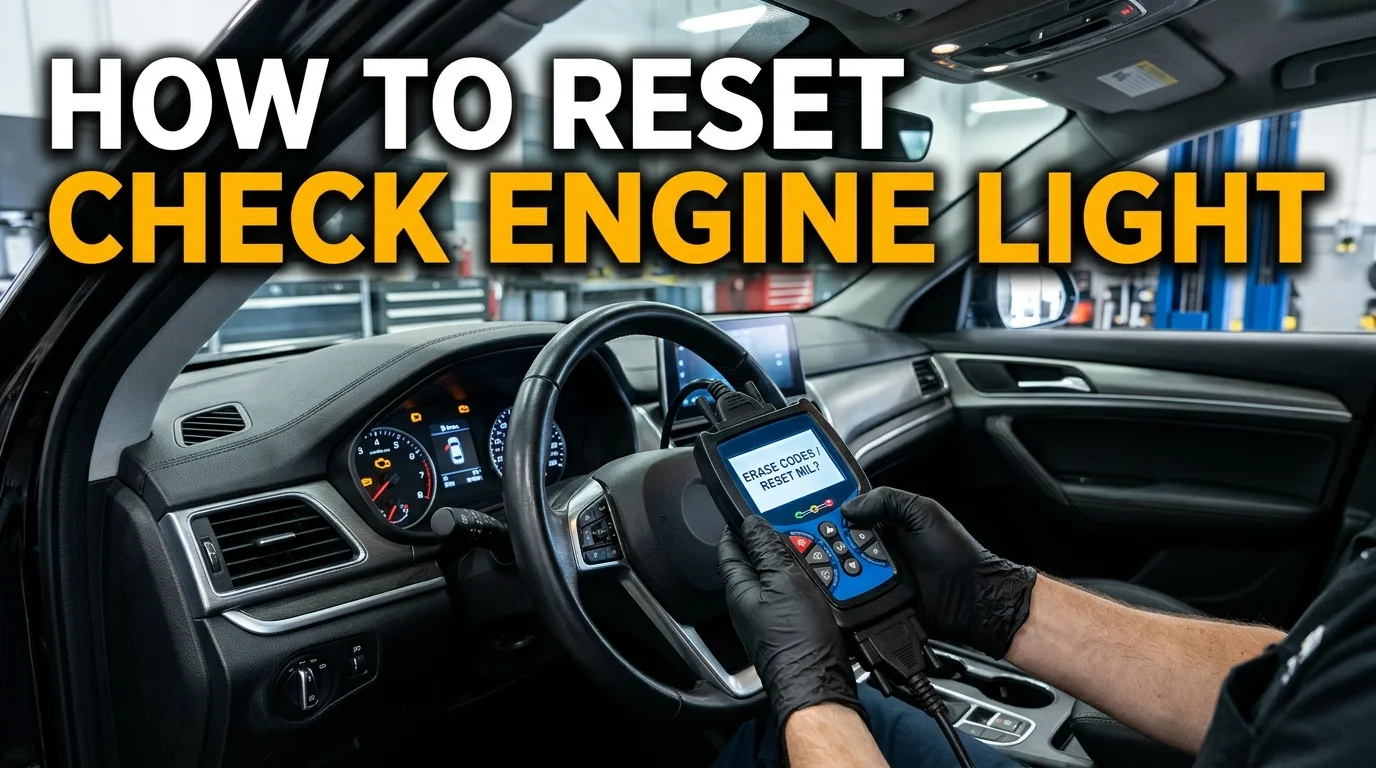
A warning light can make any drive stressful, especially when your car still seems normal. If you’re searching how to reset the check engine light, start by identifying why the light came on. Clearing the warning before fixing its cause can erase useful diagnostic information.
The safest approach is simple: scan the vehicle, record the trouble codes, repair the problem, then clear the codes. You can also let the vehicle switch the light off after successful drive cycles. Don’t treat a reset as a repair, because the warning will often return.
Quick Answer: The Safest Way to Reset the Light
Direct answer: Connect an OBD-II scanner, read and save every diagnostic code, and repair the problem causing the warning. Then use the scanner’s erase function to clear stored codes. If the repair worked, the warning should remain off after normal driving and system checks.
| Reset option | Recommended? | Main advantage | Main drawback |
|---|---|---|---|
| OBD-II scanner | Yes | Reads codes before clearing them | Requires a scanner |
| Normal drive cycles | Yes | Vehicle confirms the repair itself | May take several trips |
| Battery disconnect | Usually no | May clear codes on some vehicles | Can erase settings and readiness data |
| Ignoring the light | No | None | Fault may become more expensive |
| Professional diagnosis | Yes | Provides deeper testing | Usually involves a diagnostic fee |
What You’ll Need Before Starting
A basic OBD-II scanner works for most gasoline passenger vehicles sold in the United States since 1996. Many Bluetooth adapters also connect to smartphone diagnostic apps. More advanced vehicles may require manufacturer-specific equipment for certain systems.
You should also have your owner’s manual and somewhere to record each diagnostic trouble code. Taking a phone photo of the scanner screen works well. Saving the codes matters because clearing them can remove information useful during diagnosis.
You can browse Magzina’s Automobile section for more vehicle ownership and maintenance topics. Vehicle procedures still vary by manufacturer and model year. Always check the manual before disconnecting electrical components.
How to Reset Check Engine Light With an OBD-II Scanner
Using a scanner is usually the cleanest method because you can inspect the fault before erasing anything. A code identifies the system where the computer detected a problem. It doesn’t always identify the exact component needing replacement.
1. Park the vehicle safely. Switch off unnecessary accessories and place the transmission in Park or Neutral. Apply the parking brake before working inside the vehicle. 2. Find the OBD-II port. The connector is usually below the dashboard near the driver’s knees. Check your owner’s manual if you cannot locate it. 3. Connect the scanner. Plug the reader firmly into the diagnostic port. Follow the scanner instructions for the correct ignition position. 4. Read every stored code. Record active, pending, and permanent codes when the tool displays them. Save freeze-frame information if your scanner supports that feature. 5. Diagnose the cause. Research what each code means for your exact vehicle. Remember that one code can have several possible causes. 6. Repair the underlying fault. Fix the problem before erasing diagnostic information. Seek qualified assistance when testing exceeds your mechanical experience. 7. Clear the codes. Select “erase,” “clear DTC,” or the equivalent option after completing the repair. Follow the scanner’s prompts before turning the ignition off. 8. Start and drive the vehicle. Confirm the warning stays off during normal operation. Rescan the vehicle if it returns.
The U.S. Environmental Protection Agency explains that OBD systems monitor emissions-related components and store diagnostic trouble codes. The system also records readiness status used by many inspection programs. Clearing codes can reset some of those readiness monitors.
Why You Should Read the Code Before Clearing It
Erasing a trouble code removes an important clue about what happened inside the vehicle. Some scan tools also show freeze-frame data captured when the fault occurred. That information may include engine speed, temperature, load, and other operating conditions.
Suppose a code reports a cylinder misfire during acceleration. Clearing it immediately removes context that could help isolate the cause. Recording the information first makes later diagnosis easier and reduces unnecessary parts replacement.
Professional diagnosis can be useful when several codes appear together or one code repeatedly returns. Magzina also explains why professional automotive repair can help with complex vehicle problems. Skilled technicians can compare codes with live sensor data and physical tests.
Can the Warning Light Reset Itself?
Yes, many vehicles can turn off the malfunction indicator lamp after the underlying issue disappears. The computer must usually complete specific self-tests without detecting the fault again. The required conditions depend on the manufacturer and the stored code.
A loose fuel cap provides a common example. Tightening the cap may solve the vapor-leak condition, but the lamp might stay illuminated temporarily. You may need several normal trips before the relevant monitor runs successfully.
There isn’t one universal mileage that guarantees an automatic reset. Some monitors require particular temperatures, speeds, fuel levels, or driving conditions. Your manufacturer’s service information provides the most accurate drive-cycle procedure.
Should You Disconnect the Battery?
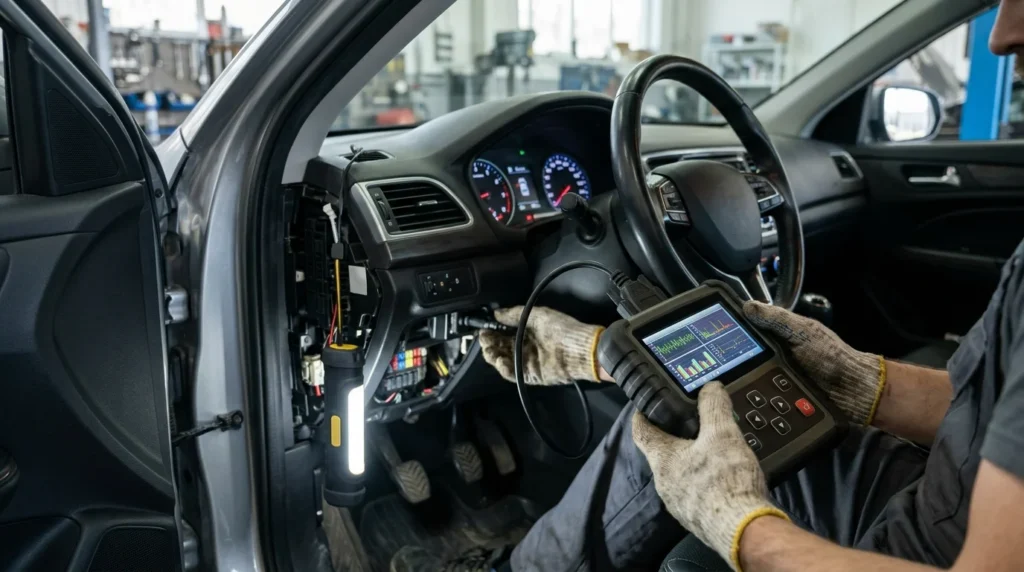
Disconnecting the negative battery cable can erase stored information on some vehicles. It is still a poor first choice for routine diagnosis. Modern cars may retain certain codes even after you interrupt electrical power.
A battery disconnect can also erase radio presets, learned engine settings, and other stored preferences. Some vehicles require relearning procedures after power is restored. Security systems and electronic modules can create additional complications.
Most importantly, disconnecting power does not repair the fault that triggered the dashboard warning. Car and Driver similarly recommends identifying the problem instead of treating code clearing as a repair.
Why Resetting Before an Emissions Test Can Backfire
Clearing codes shortly before an inspection can leave emissions monitors marked “not ready.” The vehicle must rerun those tests under appropriate driving conditions. That process can require several trips rather than one short drive.
EPA inspection guidance specifically uses readiness information when evaluating OBD-equipped vehicles. Excessive unset monitors can prevent a vehicle from passing an applicable inspection procedure. State requirements can differ, so check the rules where your vehicle is registered.
Repair the actual emissions problem before preparing for an inspection. Then allow the vehicle enough driving time to complete its required monitors. A scanner with readiness-status support can show which tests remain incomplete.
What Does a Flashing Warning Light Mean?
A flashing malfunction indicator lamp deserves more attention than a steady warning. It can indicate an active problem that may damage emissions components. An engine misfire is one common reason for urgent flashing.
Reduce speed and avoid hard acceleration if the light begins flashing while driving. Pull over safely when the vehicle shakes, loses power, overheats, or smells strongly of fuel. Arrange professional assistance instead of trying to erase the warning.
A steady light with normal operation is usually less urgent, but it still requires diagnosis. Don’t assume the vehicle is healthy just because it feels normal. Small emissions or sensor problems may produce few noticeable symptoms.
Common Reasons the Light Comes On
Many different problems can activate the dashboard indicator. Some are inexpensive, while others require detailed testing. The diagnostic code helps narrow the search.
Common possibilities include the following.
* A loose or damaged fuel cap * Worn spark plugs * A failing ignition coil * Oxygen sensor problems * Airflow sensor faults * Vacuum or intake leaks * Evaporative emissions leaks * Catalytic converter efficiency problems * Fuel delivery problems * Wiring or electrical faults
Poor fuel delivery can sometimes cause rough running, hesitation, or drivability problems. Magzina has additional information about fuel injector maintenance and related symptoms. A diagnostic code should still guide testing before any cleaning or component replacement.
What If the Light Returns After You Clear It?
A returning warning usually means the computer detected the fault again. The original repair may have been incomplete, or the problem may be intermittent. A new problem can also trigger the same dashboard indicator.
Scan the vehicle again and compare the new codes with the ones you recorded earlier. An immediate return often points toward a persistent fault. A warning returning weeks later may require testing under specific operating conditions.
Avoid repeatedly erasing the same code without investigating its cause. Each reset can remove information that helps a technician reproduce the fault. Repeated clearing also delays a repair that may prevent further damage.
Can You Reset It Without a Scanner?
You may not need a scanner if the original problem has been corrected. The onboard computer can extinguish the warning after enough successful tests. This method preserves more diagnostic information than disconnecting the battery.
Some online instructions suggest pulling an ECU fuse or using ignition-key sequences. Those procedures aren’t universal and may not be appropriate for your vehicle. Follow manufacturer information rather than a generic reset trick.
If you lack a scanner, many repair facilities can read codes during a diagnostic visit. Some auto-parts stores also provide basic code-reading services. A code reading is only a starting point, not proof that a named component has failed.
How Long Does a Reset Take?
Using a compatible scan tool can clear eligible stored codes within minutes. Diagnosing and repairing the underlying problem may take much longer. The repair time depends on what caused the warning.
Automatic clearing has no universal timetable. A vehicle may need several successful drive cycles before switching the light off. Specific monitors may also need special temperatures or operating conditions.
Readiness monitors can require additional driving after codes are cleared. This matters when an emissions inspection is approaching. Check readiness with a scanner before assuming the vehicle is prepared for testing.
When Should You Call a Mechanic?
Professional help makes sense when the warning flashes or the vehicle runs poorly. It is also useful when multiple codes appear or the same fault keeps returning. Advanced scan tools can access information that basic readers may not display.
Seek assistance quickly if the vehicle stalls, overheats, shakes strongly, or loses substantial power. Smoke, burning smells, and strong fuel odors also deserve immediate attention. Continuing to drive could create a larger repair bill.
A technician can test sensors, wiring, fuel delivery, ignition components, and emissions systems before replacing parts. This avoids using the diagnostic code as a shopping list. Good diagnosis identifies the cause rather than guessing at components.
Frequently Asked Questions
Can I learn how to reset check engine warnings myself?
Yes, a basic OBD-II reader makes the process manageable for many vehicle owners. Read and save the codes before resetting. Repair the fault before clearing diagnostic information.
Will removing the battery cable clear the light?
It may work on some vehicles, but results vary. Disconnecting the battery can also erase stored settings and readiness information. Using a diagnostic scanner is usually the better option.
Will clearing the code fix my car?
No, clearing a code only removes diagnostic information and temporarily turns off the indicator. The physical or electrical problem remains until you repair it. The computer can illuminate the warning again if it detects the fault.
How many miles should I drive after clearing codes?
No reliable mileage applies to every vehicle. Monitor requirements vary by manufacturer, model, temperature, and fault type. Check readiness with a scanner instead of relying on mileage alone.
Can I clear the light before a smog test?
Clearing codes shortly before testing can reset emissions readiness monitors. Your vehicle may then appear “not ready” during an OBD inspection. Repair the problem and confirm readiness before visiting the inspection station.
Is a steady light safe to drive with?
A steady warning without other symptoms is generally less urgent than a flashing one. You should still arrange diagnosis soon. Stop driving if you experience severe shaking, overheating, smoke, or major power loss.
The Bottom Line
Knowing how to reset check engine warnings is useful, but you should reset them after diagnosis. An OBD-II scanner lets you save the code, fix the cause, and confirm the result. That process is safer than repeatedly erasing a warning you haven’t investigated.
Start with the simplest checks, then scan the vehicle before replacing parts. Let a professional handle uncertain or potentially serious faults. Your goal isn’t just a dark dashboard; it is a properly diagnosed vehicle.