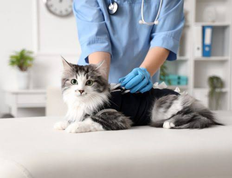
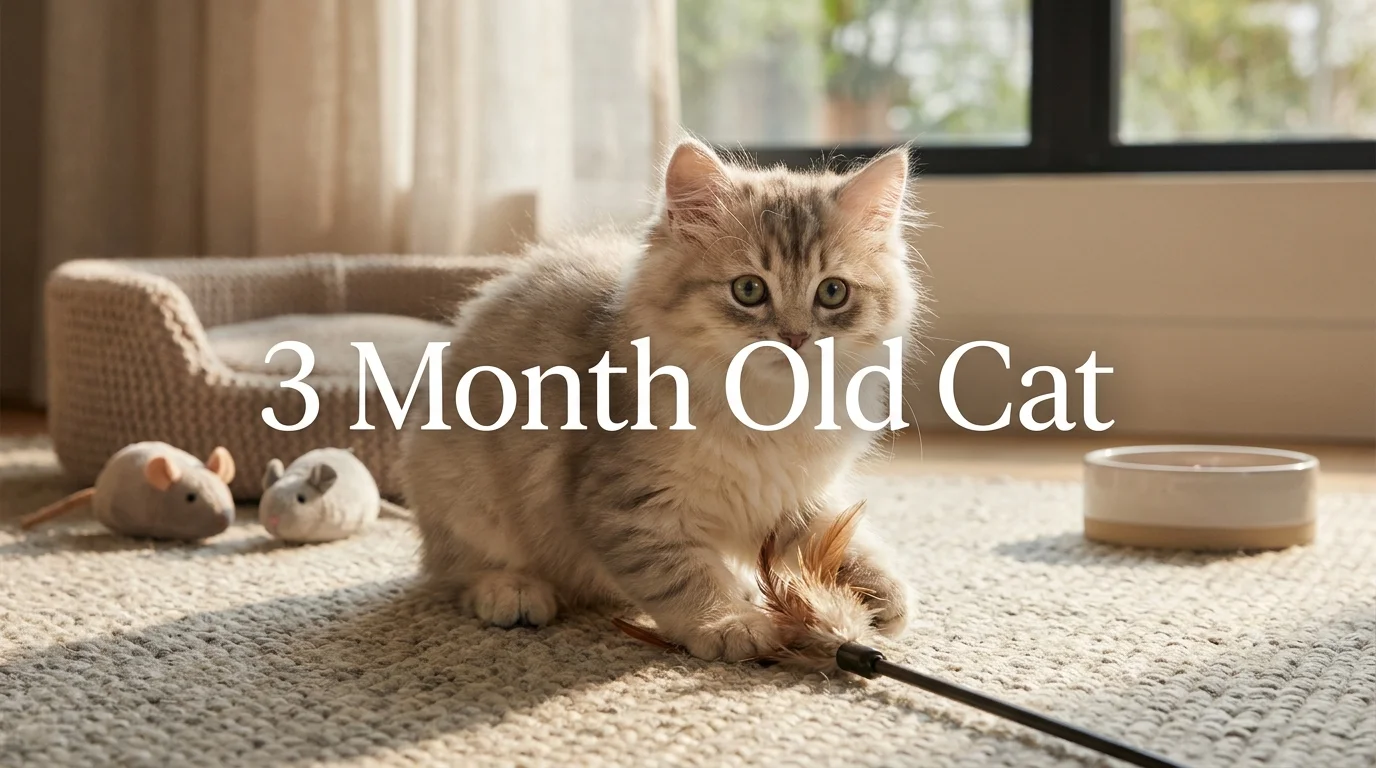
A 3-month-old cat is right in the middle of one of the busiest stages of kittenhood. At about 12 weeks, your kitten is becoming more coordinated, curious, playful, and independent while still needing kitten-specific nutrition, preventive veterinary care, training, and plenty of sleep. Knowing what is normal at this age makes it easier to enjoy the energetic phase and notice when something may need a veterinarian’s attention.
Quick answer: A 3-month-old kitten is usually eating solid kitten food about three times a day, sleeping for much of the day, playing intensely when awake, and continuing a veterinary vaccine series. Many kittens weigh around 3 pounds at this age, but healthy weight varies with breed, genetics, sex, nutrition, and individual growth.
What to Expect From a 3-Month-Old Cat
At 12 weeks, a kitten often looks less like a tiny baby and more like a miniature adult cat, but considerable physical and behavioral development is still ahead. Coordination improves quickly, so climbing furniture, chasing toys, jumping, stalking, and sudden bursts of running become everyday activities. This is also an important time to establish routines around food, litter boxes, scratching, handling, sleep, and veterinary care.
| At 3 Months | What You May Notice |
|---|---|
| Approximate age | About 12–13 weeks |
| Rough weight reference | Around 3 pounds for many kittens, with wide individual variation |
| Feeding | Usually about 3 meals per day |
| Food type | Complete and balanced kitten/growth food |
| Sleep | Kittens may sleep as much as about 20 hours in a day |
| Behavior | Pouncing, climbing, chasing, biting, scratching, and exploring |
| Teeth | Baby teeth present; adult teeth begin replacing them around 3½ to 4 months |
| Veterinary care | Vaccine boosters and parasite prevention are commonly still underway |
| Training | Litter habits, scratching locations, handling, and play boundaries |
How Much Should a 3-Month-Old Kitten Weigh?
A familiar rule of thumb is that young kittens gain roughly a pound per month during early development, which can put many 3-month-old kittens near 3 pounds. That number is only a rough reference, not a target, because breed, sex, genetics, early nutrition, illness, and body frame can produce substantial differences. A steadily increasing weight and an appropriate body condition are more useful than trying to make every kitten match one number.
Larger breeds can develop at a different pace than small-framed domestic cats, so direct comparisons can be misleading. A Maine Coon kitten, for example, may eventually become substantially larger than the average domestic shorthair. Magzina’s guide to Maine Coon cats provides more background on this unusually large breed. If your kitten is losing weight, failing to gain, appears unusually thin, or develops a swollen belly with poor growth, arrange a veterinary examination rather than relying on an online weight chart.
How Much Should a 3-Month-Old Cat Eat?
Growing kittens need more nutrition relative to their body size than adult cats, which is why both the type of food and feeding frequency matter. Cornell University’s Feline Health Center says kittens generally do best with three meals a day until they are about 6 months old, after which twice-daily feeding is usually appropriate. Three predictable meals also make it easier to monitor appetite, measure intake, and notice any unexpected changes.
The exact amount depends on the food’s calorie density, your kitten’s weight, body condition, activity, and individual growth rate. Start with the feeding directions on the package and adjust with your veterinarian if the kitten is becoming too thin or gaining excess body fat. Measuring food is more reliable than continually refilling a bowl because different kitten foods can contain very different numbers of calories per cup or can.
What Kind of Food Is Best at 12 Weeks?
Look for a food whose nutritional adequacy statement says it is complete and balanced for growth or appropriate for all life stages. AAFCO identifies growth as the life stage that includes kittens and notes that growing animals need nutrients in different proportions from mature pets. The feeding directions for a complete-and-balanced food are a starting point and may need adjustment based on the individual animal’s condition and activity.
Wet food, dry kitten food, or an appropriate combination can all be workable choices when the overall diet meets the kitten’s nutritional requirements. Keep fresh water available every day, and avoid treating cow’s milk as a necessary part of the diet because a properly weaned 12-week-old kitten should be getting nutrition from kitten food rather than milk. Treats should remain a small addition rather than replacing balanced meals, since treats and supplements are not automatically complete diets.
Why Is My 3 Month Old Kitten So Hyper?
The combination of stalking, jumping, racing through rooms, wrestling, grabbing toys, and suddenly falling asleep is very typical of kitten behavior. Young cats practice many natural predatory movements through play, so what looks like random chaos is often a kitten rehearsing chasing, pouncing, swatting, and grabbing. Providing appropriate outlets for those behaviors makes living with an energetic kitten considerably easier.
Short interactive play sessions throughout the day are usually more useful than expecting a kitten to entertain itself indefinitely. Wand-style toys, lightweight balls, tunnels, climbing areas, scratching surfaces, and toys that can be safely batted or carried help direct energy away from hands and household objects. Rotate toys periodically to keep the environment interesting, and supervise anything with strings, ribbons, elastic, or parts that could be swallowed.
Why Does My 3 Month Old Cat Bite Me?
Play biting is extremely common in kittens, and it does not automatically mean your kitten is becoming aggressive. The ASPCA describes rough play as common and natural in kittens and young cats, noting that it can include stalking, chasing, pouncing, swatting, grasping, and biting. Problems are more likely when people encourage a kitten to chase bare hands or feet because the kitten learns that human skin is part of the game.
When teeth touch your hand, calmly end the interaction and redirect the kitten to an appropriate toy. Avoid hitting, yelling, or turning your fingers into targets, because punishment can create fear while hand play can reinforce the exact behavior you want to reduce. Consistency matters more than force: toys are for biting and grabbing, while hands are for gentle handling.
Is a 3 Month Old Kitten Teething?
A kitten at exactly 3 months generally still has its set of 26 baby teeth, but the next teething phase is close. Adult incisors commonly begin replacing baby incisors at about 3½ to 4 months, followed by other permanent teeth over the following months. Most kittens have their full set of 30 adult teeth by roughly 6 months, although the exact timetable can vary.
As teething approaches, you may notice more interest in chewing, mild gum sensitivity, or an occasional tiny baby tooth, although owners often never find the teeth that fall out. Offer safe cat toys designed for chewing and keep electrical cords, thread, hair ties, and other tempting household objects out of reach. Contact your veterinarian if you notice significant mouth bleeding, a strong persistent odor, obvious pain, refusal to eat, or a tooth that appears abnormal.
How Much Does a 3-Month-Old Cat Sleep?
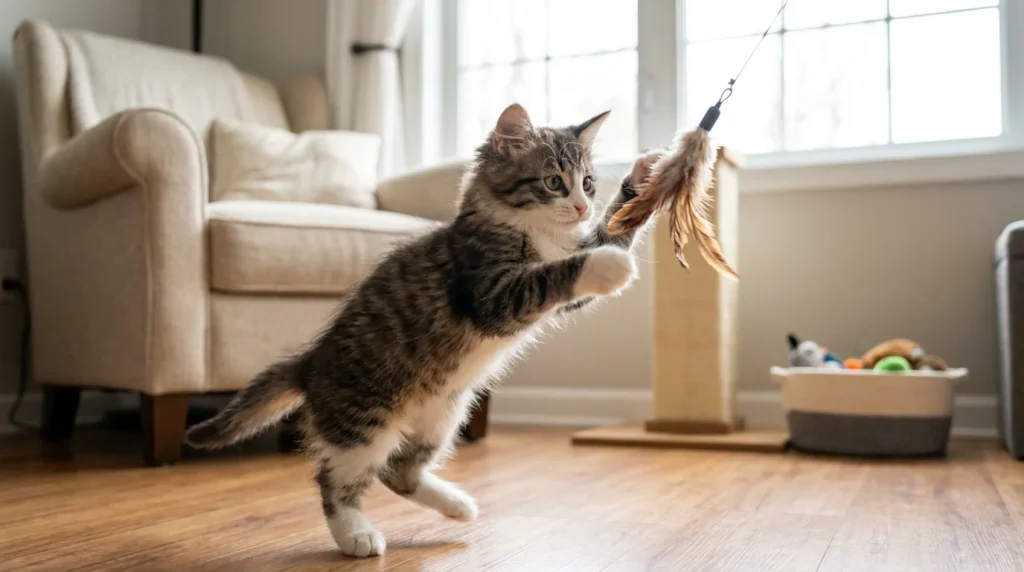
A seemingly endless cycle of sleeping and explosive activity can be normal at this age. PetMD reports that kittens may sleep as much as 18 to 20 hours per day, while individual sleep needs vary with age, health, lifestyle, and the individual cat. Young animals are growing rapidly, and long periods of rest between energetic play sessions are not unusual.
What matters is how your kitten acts when awake rather than the sleep number alone. A kitten that wakes readily, eats normally, plays, explores, uses the litter box, and interacts as expected is very different from one that is difficult to rouse, refuses food, hides continuously, or appears weak. A sudden increase in sleep accompanied by other changes should be treated as a possible health issue rather than dismissed as ordinary kitten tiredness.
Helping a Kitten Sleep Better at Night
Cats do not automatically follow a human sleep schedule, so a 3-month-old kitten may decide that the middle of the night is an excellent time to run, climb, or attack a toy. A predictable evening routine can help by providing interactive play followed by a meal and a quieter period before bedtime. Improvement is usually gradual because a young kitten’s activity rhythm cannot be completely redesigned in one evening.
Make nighttime surroundings safe even if you plan to let the kitten roam. Put away strings and other risky toys, secure breakable objects, and provide acceptable sleeping spaces, a litter box, and access to water. If the kitten is new to your home, a kitten-safe room can make the first nights easier while the animal learns its surroundings.
Litter Training at 3 Months
Most healthy 12-week-old kittens are physically capable of using a litter box reliably, especially if they were given appropriate boxes earlier in life. Keep the box easy to reach, scoop it frequently, and avoid placing it beside noisy appliances or in locations where another pet can block access. Cornell also advises providing enough litter boxes for the household and notes that many cats prefer unscented, fine-textured litter.
A commonly used guideline is one litter box for each cat plus one additional box, especially in homes with multiple cats. If a previously reliable kitten suddenly begins urinating or defecating outside the box, first consider access, cleanliness, litter preference, stress, and possible illness rather than assuming the animal is misbehaving. Straining to urinate, repeated attempts with little or no urine, crying in the box, or obvious discomfort requires prompt veterinary attention.
Scratching, Handling, and Social Skills
Scratching is normal feline behavior rather than a bad habit, so the goal is to provide appealing legal places to do it. Offer sturdy vertical and horizontal scratching surfaces near places your kitten sleeps, plays, or has already tried to scratch. Rewarding use of those surfaces is more productive than expecting a kitten to understand that furniture is off limits without an alternative.
Three months is also a useful age to continue gentle handling practice even though the earliest sensitive socialization period has already passed. Briefly touch paws, ears, the mouth area, and the body while pairing calm cooperation with treats, play, or praise, and introduce a carrier as a familiar resting place rather than something that appears only before stressful trips. Keep sessions short and positive so grooming, nail trims, carrier travel, and veterinary examinations become easier rather than more frightening.
Vet Care and Vaccines for a 3-Month-Old Cat
A 12-week-old kitten is generally not finished with its initial preventive-care schedule. The AAHA/AAFP vaccination guidance recommends starting the combination vaccine protecting against feline panleukopenia, herpesvirus-1, and calicivirus no earlier than 6 weeks and repeating doses every three to four weeks until about 16–20 weeks of age. FeLV vaccination is considered core for kittens and young cats under one year because of their age-related susceptibility, although your veterinarian should tailor the schedule to the individual kitten and build the actual schedule around health, previous records, lifestyle, vaccine product, and exposure risk.
Rabies timing deserves particular attention because requirements can vary with vaccine labeling and state or local law. Do not assume that a vaccine given earlier in kittenhood means the entire series is complete, and bring every vaccination record you received from the breeder, shelter, rescue, or previous veterinarian to the next appointment. That lets your veterinarian identify missing doses, confirm the correct dates, and avoid restarting or guessing from memory.
Preventive visits are for much more than vaccinations because they also allow the veterinarian to monitor weight, development, teeth, heart and lungs, skin, ears, behavior, and parasite risk. Magzina’s guide to annual pet wellness programs explains how routine examinations can establish a health baseline and support earlier identification of changes. For a young kitten, those visits also create an opportunity to ask questions before feeding, behavior, or preventive-care problems become harder to manage.
Parasite Prevention Still Matters Indoors
Kittens can carry intestinal parasites even when they look healthy, so parasite care should be based on veterinary guidance rather than the assumption that an indoor lifestyle means zero risk. The Companion Animal Parasite Council recommends frequent intestinal-parasite testing during the first year and year-round broad-spectrum parasite control, with specific recommendations depending on age, lifestyle, exposure, and local risk. CAPC’s ascarid guidance recommends intestinal parasite testing at least four times during a kitten’s first year.
Bring a fresh stool sample when your veterinarian requests one, and tell the clinic what dewormers or flea products the kitten has already received. Use only products labeled as appropriate for your kitten’s age and weight, and follow veterinary or label directions exactly. A veterinarian can tailor flea, tick, heartworm, and intestinal-parasite prevention to your part of the United States and to whether your kitten remains indoors or has outdoor exposure.
When Should You Discuss Spaying or Neutering?
Three months is not too early to discuss the plan even if surgery is scheduled for later. The Feline Veterinary Medical Association supports spaying or neutering cats not intended for breeding by 5 months of age and notes that some cats can become reproductively active as early as 4–5 months. Your veterinarian can recommend timing based on your kitten’s health, weight, development, and individual circumstances.
Planning in advance also reduces the chance that the appointment gets delayed until after sexual maturity begins. Shelters and veterinary practices may use somewhat different age or weight protocols, so an individual recommendation can differ without automatically being wrong. Ask during the kitten’s vaccine visits so you know what the clinic requires before scheduling surgery.
How to Kitten-Proof Your Home at 3 Months
A confident 12-week-old kitten can reach places that were inaccessible only a few weeks earlier, which means kitten-proofing needs to change as climbing and jumping improve. Assume that anything dangling, small enough to swallow, easy to knock down, or reachable from a chair or shelf will eventually be investigated. Recheck the home from kitten height as well as from countertops and furniture the kitten can now climb.
- Secure electrical cords, blind cords, thread, yarn, ribbon, dental floss, hair ties, rubber bands, and other swallowable strings.
- Store medications, cleaners, pesticides, chemicals, and potentially toxic plants where the kitten cannot reach them.
- Check window screens and balcony access, and do not rely on an open window alone to keep a curious kitten inside.
- Keep small objects, needles, sharp items, and breakable decorations out of reach.
- Check washers, dryers, closets, recliners, boxes, and other enclosed spaces before closing or operating them.
- Supervise toys that contain strings, feathers, loose pieces, or materials your kitten attempts to chew or swallow.
Curiosity is healthy, so the goal is not to remove every opportunity for exploration. Instead, replace unsafe opportunities with climbing furniture, scratching surfaces, hiding spots, puzzle-style feeding activities, and supervised interactive play. A kitten with suitable things to climb, chase, scratch, and investigate has more chances to practice normal behavior safely.
When a 3 Month Old Kitten Needs a Vet
Young kittens can become unwell quickly, and significant changes in appetite, energy, breathing, elimination, or behavior deserve more attention than they might in a stable adult cat. Call your veterinarian promptly for repeated vomiting or diarrhea, refusal to eat, marked weakness, persistent eye or nasal discharge, ongoing coughing, obvious pain, poor weight gain, or a sudden major behavior change. Do not wait for a routine appointment if symptoms are becoming progressively worse.
Trouble breathing, collapse, seizures, major trauma, uncontrolled bleeding, pale gums, or suspected poisoning should be treated as emergencies. Magzina’s animal urgent care guide similarly identifies breathing difficulty, seizures, collapse, and suspected toxin exposure as situations that require emergency care rather than home observation. When you are unsure, calling your regular veterinarian, a veterinary urgent-care service, or an emergency hospital can help you determine the safest next step.
A Simple Daily Routine for a 3-Month-Old Kitten
Kittens do not need every minute scheduled, but a predictable framework can make feeding, training, sleep, and litter habits easier to monitor. Spread meals and play across the day rather than packing all activity into one long session, and allow the kitten to sleep whenever it needs to rest. The best routine is one that fits your household while still meeting the kitten’s nutritional, behavioral, and safety needs.
| Part of Day | Example Routine |
|---|---|
| Morning | Meal, fresh water, litter-box check, short play session |
| Late morning | Exploration, independent play, nap |
| Midday | Meal, brief handling or training, play |
| Afternoon | Sleep, enrichment, supervised exploration |
| Evening | Meal, interactive play, litter-box cleaning |
| Before bed | Calm activity, safety check, quiet sleeping area |
Use the schedule as a framework rather than a rigid clock. A healthy kitten’s appetite, activity, and sleep patterns can vary from one day to another, especially after adoption, vaccination, travel, or changes in the household. Consistent routines make those changes easier to recognize because you become familiar with your own kitten’s normal patterns.
The Bottom Line
A 3 month old cat is an energetic, fast-growing kitten that needs ample play, extensive sleep, safe exploration, positive training, and continued preventive veterinary care. Three meals a day, appropriate kitten food, consistent litter and scratching routines, safe toys, vaccine boosters, and parasite prevention provide a strong foundation for the months ahead. Pay attention to your own kitten’s normal appetite, weight trend, energy, and bathroom habits because changes from that personal baseline often tell you more than comparisons with another kitten.
Frequently Asked Questions
Is a 3-Month-Old Cat Still a Kitten?
Yes, a 3-month-old cat is very much a kitten and still has many months of physical and behavioral development ahead. At this age, rapid growth, high-energy play, long naps, and continued learning are expected. Adult body size, temperament, teeth, and social maturity have not yet fully developed.
How Often Should a 3-Month-Old Kitten Eat?
Most kittens this age do well with about three meals per day. Cornell recommends three daily meals for kittens until approximately 6 months of age because growing kittens require more food per unit of body weight than adults. Use the feeding guide for your kitten’s complete-and-balanced food as a starting point and adjust with veterinary guidance as needed.
Can a 3-Month-Old Kitten Eat Adult Cat Food?
A growing kitten should receive a diet labeled complete and balanced for growth or all life stages, rather than relying on a food formulated only for adult maintenance. Kittens have different nutritional requirements from mature cats because they are building bones, muscles, and other tissues rapidly. Check the nutritional adequacy statement rather than deciding from package design or flavor alone.
Is It Normal for a 3 Month Old Kitten to Bite a Lot?
Frequent playful biting can be normal at 3 months, especially during stalking, wrestling, and high-energy play. The important part is teaching the kitten that hands and feet are not prey by consistently redirecting that energy toward toys. Biting accompanied by persistent fear, pain, unprovoked attacks, or an abrupt personality change warrants closer investigation.
How Long Should a 3 Month Old Kitten Sleep?
There is no single required number of hours, but kittens may sleep up to about 20 hours during a day. Long naps are usually less concerning when the kitten is bright, active, hungry, and interactive while awake. A kitten that is unusually difficult to wake, stops eating, becomes weak, or shows other signs of illness should be assessed by a veterinarian.
What Vaccines Does a 3 Month Old Kitten Need?
At about 12 weeks, many kittens are partway through their combination vaccine series rather than completely finished. AAHA/AAFP guidance calls for repeat FPV/FHV-1/FCV vaccination through approximately 16–20 weeks, and FeLV vaccination is considered core for kittens and young cats under one year. Rabies and other vaccine timing depends on vaccine labeling, health status, risk, and applicable state or local requirements, so your veterinarian should confirm the schedule from the kitten’s records.