
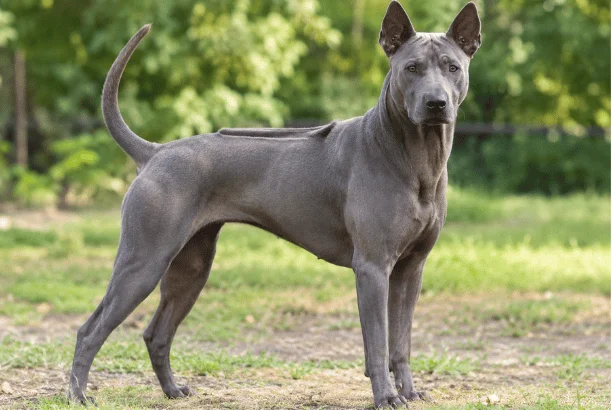
The Thai Ridgeback is a rare, athletic dog with strong loyalty and an independent mind. It suits experienced owners who enjoy training, exercise, and structured routines. Its short coat is easy to maintain, but its prey drive and jumping ability demand careful management.
| Fact | What U.S. owners should know |
|---|---|
| Origin | Thailand, especially the eastern region |
| AKC status | Foundation Stock Service breed |
| Height | About 20–24 inches |
| Weight | About 35–75 pounds |
| Typical lifespan | About 12–14 years |
| Coat colors | Red, black, blue, and very light fawn |
| Exercise | At least one hour daily for most adults |
| Grooming | Low-maintenance short coat |
| Training level | Better suited to experienced owners |
| Common health concerns | Dermoid sinus and hip dysplasia |
| U.S. puppy price | Often about $1,800–$3,000; some lines cost more. |
Key takeaways
- This is an intelligent, self-reliant breed that benefits from experienced handling.
- Daily exercise and mental work help prevent boredom and destructive behavior.
- A tall, secure fence matters because these dogs can jump and chase moving animals.
- Early socialization supports calmer behavior around visitors, children, and other dogs.
- Prospective owners should ask about dermoid sinus, hip health, and veterinary records.
What Makes the Thai Ridgeback Different?
The breed developed in Thailand and has a documented history spanning several centuries. FCI records describe it as a hunting and companion dog from Thailand. Its isolation in eastern Thailand helped preserve a distinct type over many generations.
The most recognizable feature is a ridge of hair growing opposite the surrounding coat. The coat itself is short, smooth, and usually simple to groom. Official standards list solid red, black, blue, and very light fawn colors.
Temperament: Loyal, Alert, and Independent
These dogs often form close bonds with their household and can be reserved with strangers. They are intelligent, observant, and capable of making decisions without constant direction. That independence can feel rewarding to experienced owners but frustrating to beginners.
Strong hunting instincts can make small animals difficult housemates. Children and dogs also need supervised, thoughtful introductions rather than forced contact. Individual temperament varies, so early experiences and training still shape daily behavior.
Training and Socialization Need an Early Start
Positive reinforcement works better than harsh corrections for a sensitive, independent dog. Keep sessions short, clear, and rewarding so the dog stays engaged. Practice recall, leash skills, settling, handling, and door manners from puppyhood.
Socialization should include calm exposure to people, surfaces, sounds, vehicles, and veterinary handling. The goal is confidence, not constant friendliness toward every stranger. Magzina’s guide to pet comfort during treatment can help owners prepare for lower-stress veterinary visits.
Exercise and Home Setup Matter
PetMD recommends at least one hour of daily exercise for most adults. Walking, hiking, retrieving, swimming, scent games, and agility can provide useful outlets. Mental challenges matter because physical exercise alone may not satisfy an intelligent working dog.
A secure yard needs more than an ordinary low fence. PetMD cites guidance favoring a fence around six feet high because the breed jumps well. Off-leash exercise should happen only in safely enclosed areas with reliable supervision.
U.S. climate also affects daily routines. The short coat offers limited protection during cold winters, while hot weather raises overheating risks. Magzina’s article on pet dehydration and electrolyte problems explains warning signs that deserve veterinary attention.
Grooming and Everyday Care Are Straightforward

The short coat generally needs light brushing to remove loose hair and surface debris. Check ears, trim nails, and maintain dental care on a regular schedule. Bathing can stay occasional unless the dog gets dirty or develops a skin problem.
Feed a complete diet suited to age, activity, and body condition. Active dogs still gain weight when portions exceed their needs. Your veterinarian can help adjust calories as activity, age, and health change.
Health Issues U.S. Owners Should Discuss With a Veterinarian
Dermoid sinus is a congenital skin defect reported in this breed. Some cases remain shallow, while deeper tracts can involve tissues near the spine. PetMD notes that imaging and surgery may be needed, depending on location and severity.
Hip dysplasia is another concern worth discussing with breeders and veterinarians. Ask what health screening was completed on both parents before considering a puppy. Magzina’s overview of routine veterinary bloodwork also explains how baseline testing can support long-term care.
Seek veterinary help for sudden weakness, collapse, repeated vomiting, severe pain, or breathing trouble. New neurologic signs or infected skin openings also deserve prompt evaluation. Magzina’s pet urgent-care guide offers a useful framework for time-sensitive decisions.
U.S. Price, Availability, and Registration
A Thai Ridgeback puppy can be difficult to find in the United States. PetMD estimates many puppies around $1,800–$3,000, with some champion lines reaching about $5,000. Chewy cites roughly $3,000 as a common U.S. breeder price.
Price should never replace health, temperament, and breeder transparency as selection criteria. Ask for health records, parent information, socialization practices, and a written purchase agreement. Be cautious with sellers who avoid questions or promise immediate shipping without screening buyers.
The American Kennel Club currently lists the breed within its Foundation Stock Service. That status is different from full AKC breed recognition. Eligible FSS dogs can still participate in selected AKC companion and performance events.
Is This Breed a Good Match for Your Home?
| May fit well | Maybe challenging |
|---|---|
| Experienced dog owners | First-time owners wanting an easygoing breed |
| Active households | Homes with little daily exercise time |
| Securely fenced properties | Yards with low or weak fencing |
| Owners who enjoy training | People expecting automatic obedience |
| Homes prepared for careful introductions | Households with free-roaming small pets |
Think about management demands before focusing on appearance. A striking ridge and athletic build do not make daily ownership simple. The strongest matches usually offer structure, patience, exercise, and realistic expectations.
Apartment living can work when daily exercise, enrichment, and leash management are reliable. Shared spaces may make stranger exposure and prey distractions more frequent. A quiet routine and secure exercise plan matter more than square footage alone.
Frequently Asked Questions
Is a Thai Ridgeback a good family dog?
It can be a devoted family companion in the right household. Early socialization and consistent training improve the chances of calm, predictable behavior. Experienced supervision is especially important around young children, visitors, and unfamiliar dogs.
How much does this breed cost in the U.S.?
Published estimates vary by breeder, location, pedigree, and availability. PetMD gives an average range near $1,800–$3,000 and notes higher prices for some lines. Buyers should budget for veterinary care, training, insurance, food, and secure fencing too.
Is this dog easy to train?
It learns quickly but may not obey simply to please a handler. Short, reward-based sessions usually suit its independent temperament better than repetitive drills. First-time owners may prefer professional training support from the beginning.
Why is the breed rare in the United States?
Its historic population developed mainly in Thailand, and numbers remain limited outside its home country. Limited breeder availability can make puppies harder to locate in America. Rarity also increases the need to verify health records and breeder practices carefully.
How does it differ from a Rhodesian Ridgeback?
The two breeds share a reverse-growing ridge, but they developed in different regions. The Thai breed comes from Thailand and has upright ears and several accepted colors. The Rhodesian breed developed in southern Africa and is typically larger with folded ears.
Next Steps Before Bringing One Home
Start by meeting adult dogs when possible and speaking with experienced owners or reputable breed contacts. Ask breeders detailed questions about health screening, temperament, socialization, and lifetime support. Then discuss your household, climate, and activity level with a veterinarian before making a commitment.
Plan the first months before the dog arrives. Choose a trainer, secure the yard, schedule veterinary care, and prepare safe confinement areas. Careful preparation will make the transition easier for both the dog and your household.